
What is Calisthenics & How to Start?
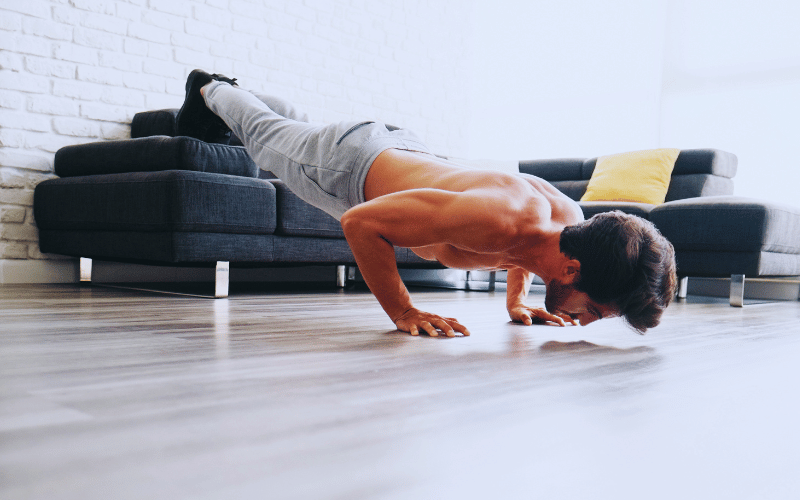
What is Calisthenics?
Calisthenics is a form of bodyweight training that promotes multi-system adaptations.
In other words, it is a type of resistance training that uses the individual’s own body mass as the primary load, leading to improvements across the muscular, cardiovascular, neuromuscular, and metabolic systems, thereby enhancing overall physical function and conditioning.
How is Calisthenics Different from Other Bodyweight Exercises?
Although bodyweight-based movements are present in various disciplines such as gymnastics, Pilates, dance, running, martial arts, climbing, and others, calisthenics is distinguished by its emphasis on progressive strength development through structured movement patterns.
It typically focuses on foundational pushing, pulling, squatting, and core-strength exercises, often performed through closed kinetic chain movements, in which the hands or feet remain fixed against a surface while multiple joints move and coordinate simultaneously.
This type of movement relies heavily on coordination, control, and relative strength. Unlike gymnastics, which is highly competitive and apparatus-based, or Pilates, which prioritizes controlled stability and rehabilitation principles, calisthenics is more broadly oriented toward functional strength, skill progression, and scalable bodyweight resistance training.
How are Calisthenics Accessible at Home?
Compared to many other training modalities, it is is generally considered low-cost and accessible, as it requires little to no external equipment.
At home, calisthenics can be adapted using everyday objects to modify difficulty and support progression. For example, chairs can be used for incline push-ups or step-ups, while stairs can be used for elevated push-ups or split squats to adjust range of motion and intensity. Bedsheets or towels can be used to assist pulling movements, such as body rows, by anchoring them securely over a door or sturdy structure. A sturdy bar, pole, or doorframe can also be used for support, stability work, grip training, or hanging exercises such as pull-ups or dead hangs, depending on what is safely available.
How to Start a Calisthenic Workout?
Starting calisthenics involves building strength through progressive variations of the same movement.
Most exercises begin with a basic version, such as a push-up, squat, or plank, and then gradually progress into more challenging variations as strength, control, and coordination improve. For example, push-ups can progress from wall push-ups to knee push-ups, then full push-ups, and eventually to more advanced variations such as decline or archer push-ups. This principle of progression allows calisthenics to continuously build strength over time.
Get Results Working with a Personal Trainer
For those seeking structure and safe progression, Premium Personal Training offers a tailored approach to calisthenics.
With a certified personal trainer, clients can refine technique, learn how to appropriately progress exercises, and follow a structured plan designed to build strength, control, and movement quality over time, supporting continuous development from foundational to advanced calisthenic skills.
Contact us to book a free consultation today!